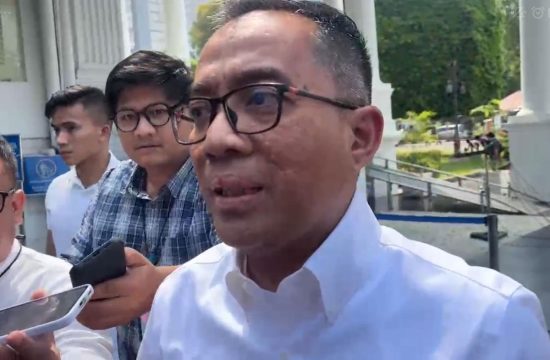
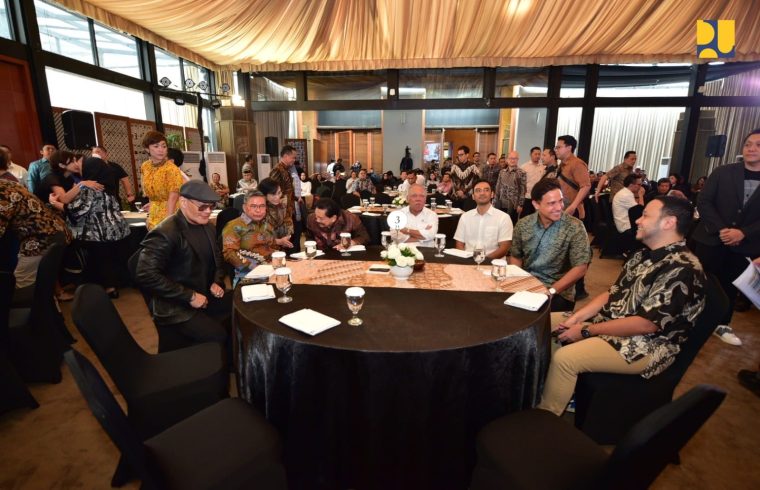
Jakarta, ABIM (27/11/2023) – “Thank you for the book, it can be a reference for the PUPR Ministry in developing infrastructure with low emissions, according to the tagline for future PUPR development, namely by paying attention to quality, aesthetics and environmental sustainability,” commented Minister Basuki at the book launching event ‘Dangerous Humans: Towards Zero eMissions?’ at Dharmawangsa Hotel, Jakarta (11/24).
Minister Basuki expressed his appreciation for the writing of this book, stating that it has furnished a comprehensive and profound understanding of the environmental ramifications of greenhouse gas (GHG) carbon emissions, encompassing both the progression towards zero emissions and the phenomenon of global warming.
The PUPR Ministry, according to Minister Basuki, maintains its commitment to the principles of environmental sustainability through the maximization of the capabilities of various infrastructure. These include the installation of a floating solar plant with a total energy potential of 8,800 MW and the operation of an air power plant (PLTA) at the dam, which is capable of generating 6,400 MW of power.
Then, the book “Dangerous Humans: Towards Zero eMissions?” was written by Diaz Hendropriyono, Special Staff to the President of the Republic of Indonesia. This book examines the consequences of greenhouse gas emissions that have contributed to an alarming level of global warming, even threatening the future of life on this earth.
“Rather than benefiting from technological advancements, the world will face climate catastrophes such as rising sea levels, drought, extreme heat, hunger, and toxic air pollution in the future.” “Due to the fact that many individuals produce and consume in excess without regard for the environment, specifically dangerous humans,” Diaz explained.
As stated by Diaz, this book presents several kinds of recommendations aimed at overcoming climate-related catastrophes and global warming. These include the establishment of sustainable ecosystems, compulsory global warming education, enhancement of research budgets, provision of credits or incentives for plastic non-usage (including ecolabel coverage), reduction of non-GHG emissions, and encouragement of innovation in alternative ecological sectors.
“The Indonesian government has made efforts through the Paris Agreement and the ENDC targets, but other parties’ participation is still required.” “We need to put in greater effort, as our ecopreneurs have done, especially in reducing plastic waste and other waste,” he said.
Accompanying Minister Basuki is Endra S. Atmawidjaja, the Minister of Technology, Industry, and the Environment.(ABIM)