Surabaya, East Java, ABIM (24/11/2023) – As outlined in the National Long Term Development Plan (RPJPN) 2025-2045, the Ministry of Public Works and Public Housing (PUPR) continues to promote the establishment of “green infrastructure” in Indonesia with the aim of achieving the Golden Indonesia Vision 2045.
“Green infrastructure” plays a crucial role in ensuring that the physical environment and biocapacity are not compromised during the course of development.
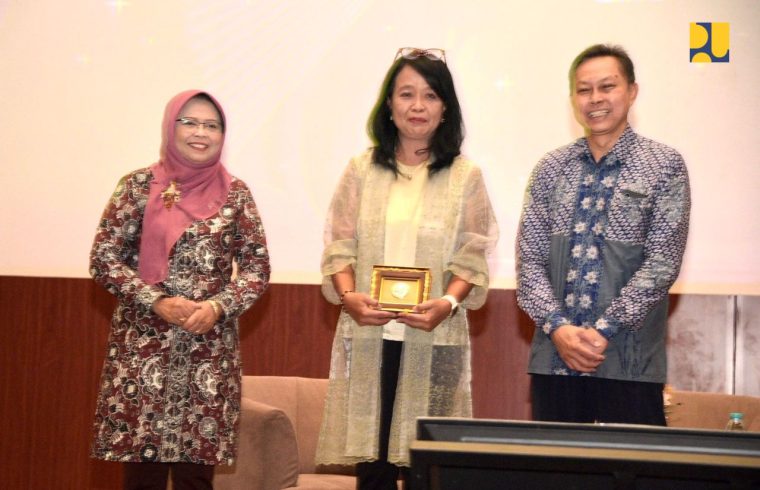
Director General of Cipta Karya Diana Kusumastuti, representing PUPR Minister Basuki Hadimuljono at the 2023 International Development Conference (IDSC) Seminar on Saturday (11/11) in Airlangga University, Surabaya, stated, “In order to improve the quality of life for the community while preserving the natural system while also paying attention to social, cultural, and economic aspects.”
‘Green infrastructure’ is implemented within the construction industry via the Green Building (Bangunan Gedung Hijau/BGH) concept. BGH is defined by PP Number 16 of 2021 regarding the Implementation of Regulations of Law Number 28 of 2002 concerning Buildings as a structure that meets building technical standards and has measurable, significant energy, water, and other resource conservation performance.
The PUPR Ministry also created and proclaimed a new set of laws, namely PUPR Ministerial Regulation Number 10 of 2023 concerning Smart Buildings (Bangunan Gedung Cerdas/BGC), which regulates the use of smart system or smart technology in buildings.
The Ministry of PUPR continues to promote enhanced efficiency in infrastructure development, as well as waste reduction and carbon emission reduction. numerous cutting-edge technologies are also being used in numerous important initiatives at the PUPR Ministry to realize intelligent, efficient, and sustainable infrastructure development.
Through supporting regulatory studies, the Ministry of PUPR also invites universities, particularly Airlangga University, to continue developing the Green Economy concept as a way to connect the principles of sustainable development with economic activities. Implementing a carbon tax, eliminating fossil fuel subsidies, and nature protection policies are some examples.
In addition, Muhammad Reva, the head of the East Java BPPW, Director General of Human Settlements Diana Kusumastuti, Director of Strategic Infrastructure Essy Asiah, and Director of Settlement and Housing Engineering Development Dian Irawati were in attendance.(ABIM)